Number of IDEA-eligible Students Increases 3 Percent in 2024; Tops 8 Million
The U.S. Dept. of Education has released new data on students with disabilities (eligible under the Individuals with Disabilities Education Act or IDEA). Section 618 of the IDEA requires that each state annually submit data about the infants and toddlers, birth through age 2, who receive early intervention services under Part C of IDEA, and children with disabilities, ages 3 through 21, who receive special education and related services under Part B of IDEA.
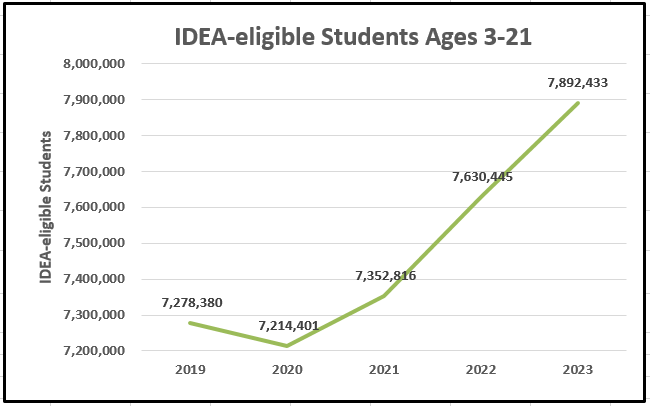
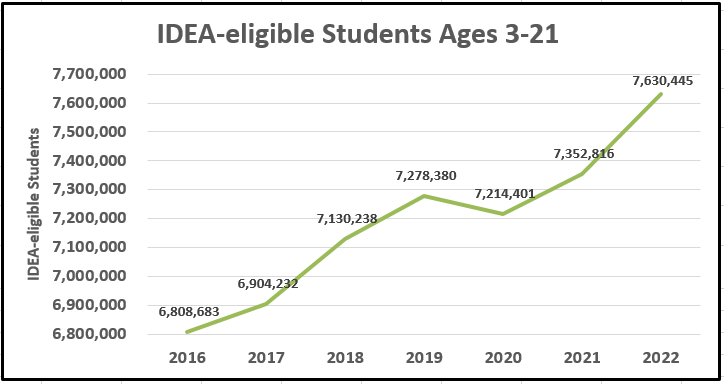
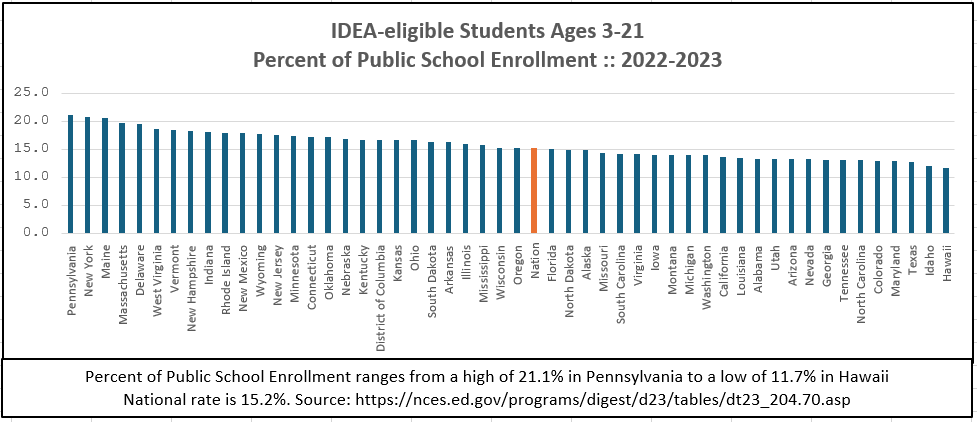
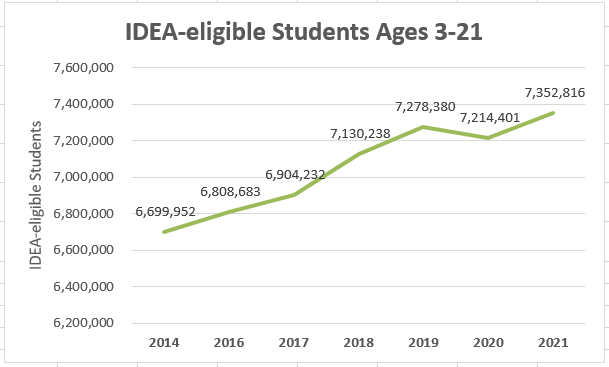
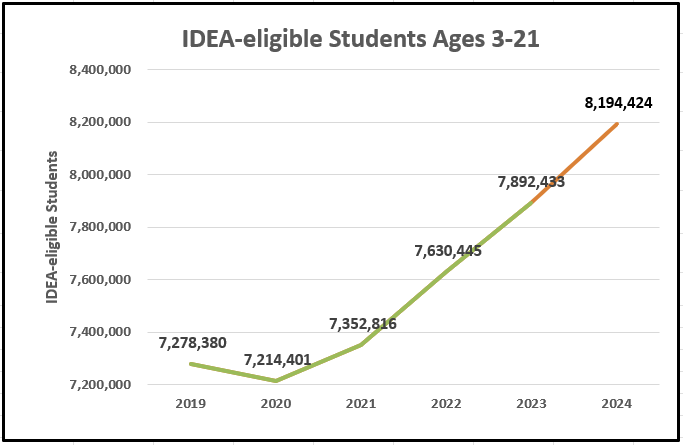
The new data show the number of IDEA-eligible children ages 3-21 in 2024 increased significantly from 2023, which also showed a 3% increase.
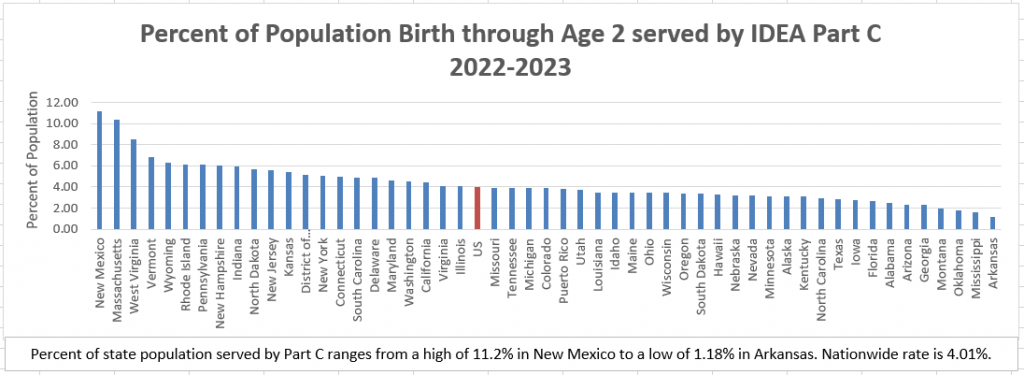
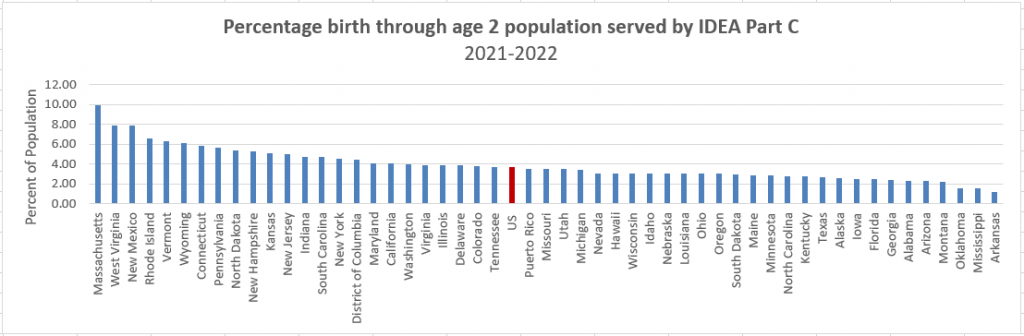
The number of children served under IDEA Part C (birth through age 2) declined slightly in 2024, from 462,847 to 458,920, a decrease of 1%.
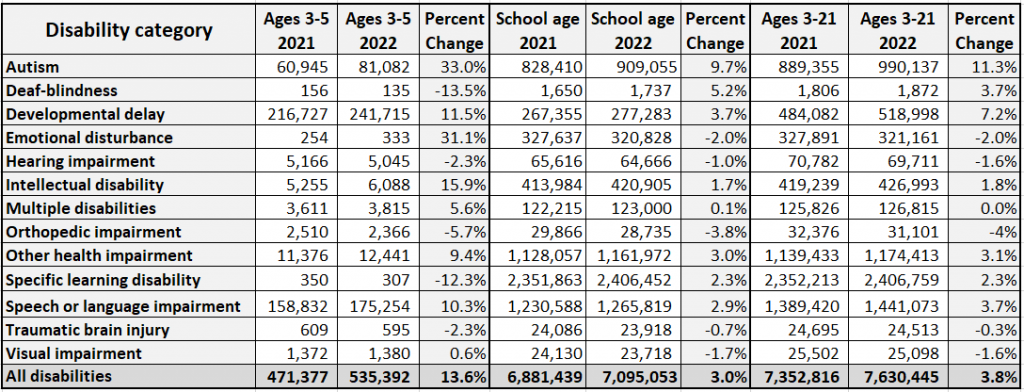
Students ages 3-21 increased by 3.8% (an additional 301,991 students over 2023, totaling 8,194,424) which breaks down as follows:
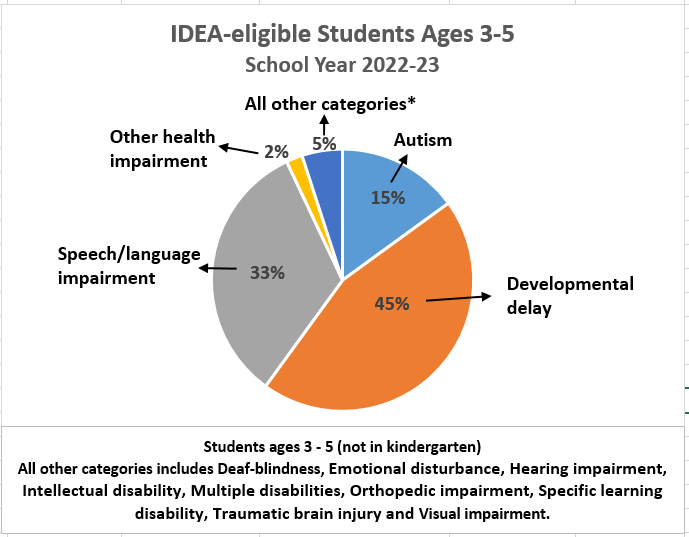
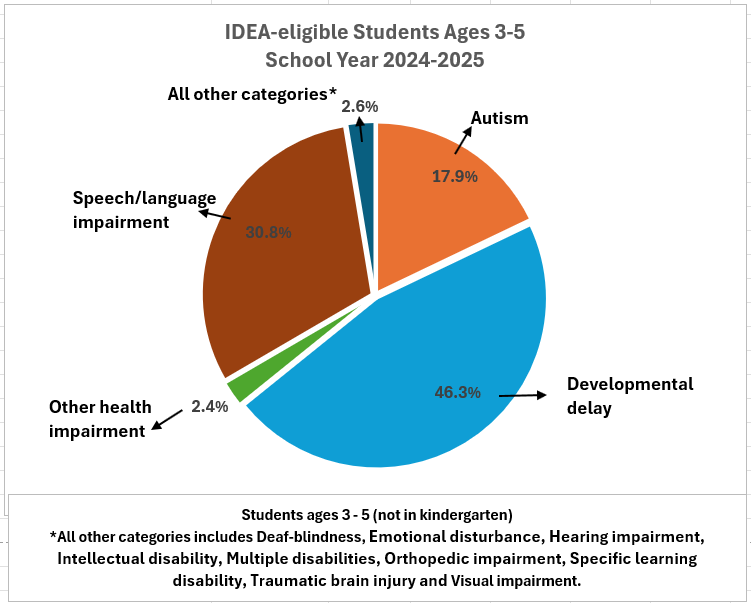
- students ages 3-5 (not in kindergarten) increased by 2.7% (additional 15,744 students, totaling 603,652)
- school age students (ages 5 in kindergarten to 21) increased by 3.9%, (additional 286,247 students, totaling 7,590,772).
CHANGES BY STATE
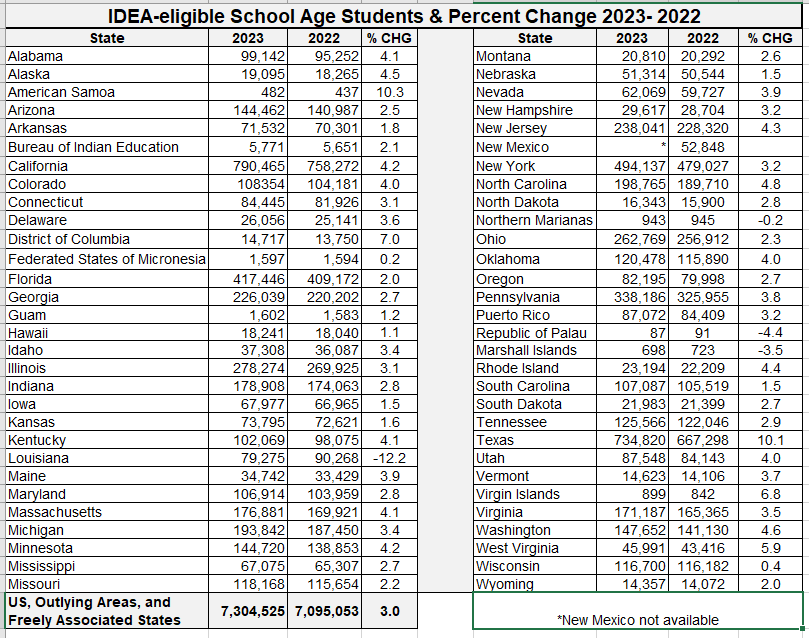
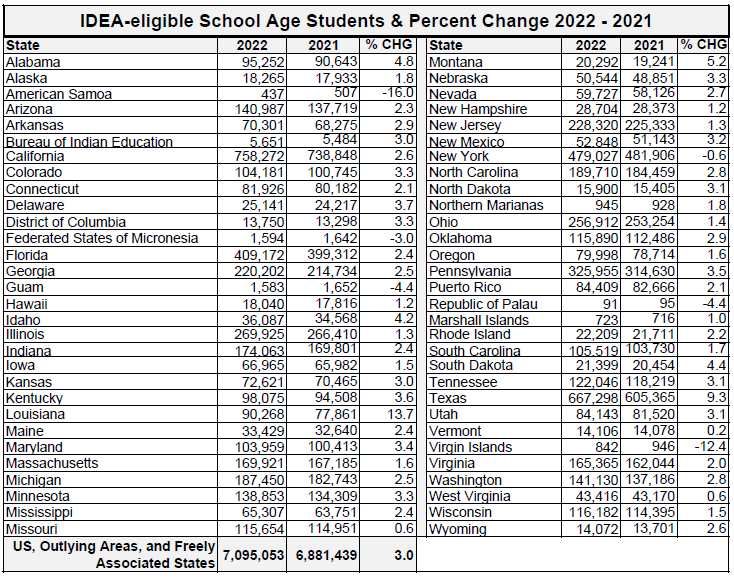
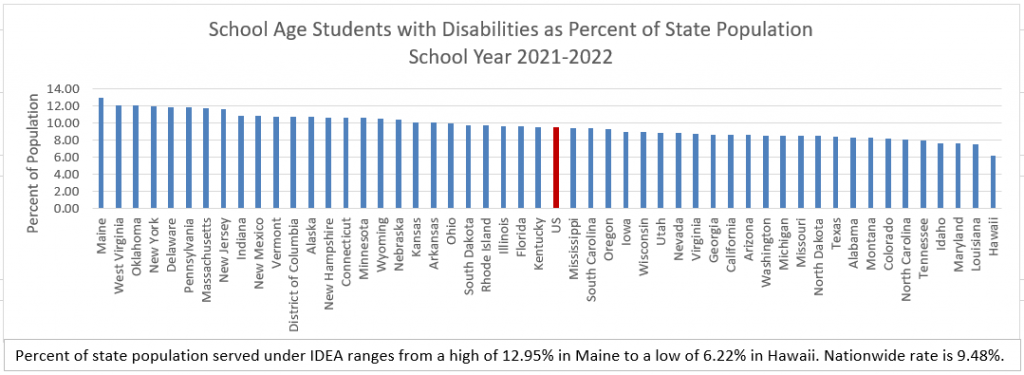
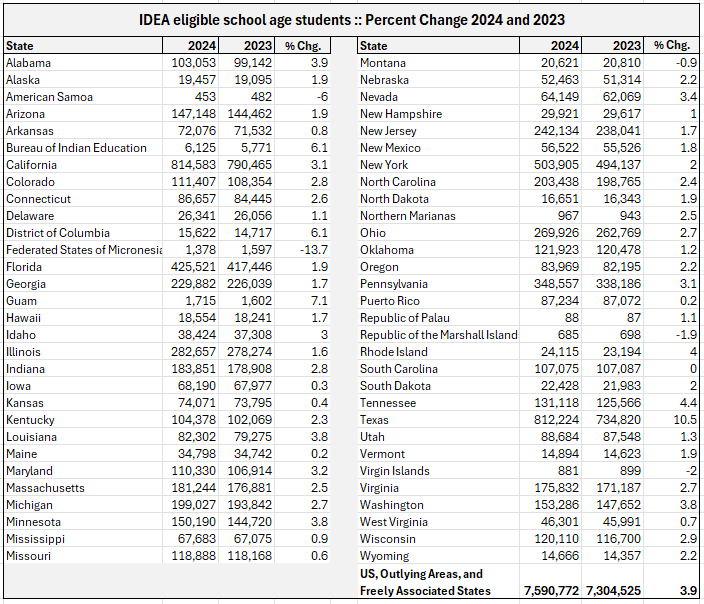
Changes from 2023 in state-level rates of school age students are shown below. The large increase in Texas (77,404) accounts for 27% of the total increase in school age students and is likely due to the issue addressed in this article.
STUDENT CHARACTERISTICS
- GENDER
Among school age students with disabilities (ages 5 (in kindergarten) to 21) 35.6% are female (2,704,404) while 64.4% are male (4,882,768). However, this varies by disability category. For example, school age students with autism are 20.4% female and 79.6% male. (Total school enrollment is almost evenly split: 48.6% female and 51.4% male.)
- RACE/ETHNICITY
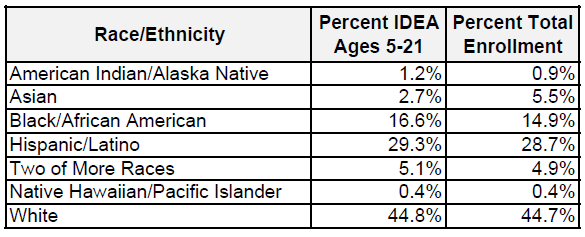
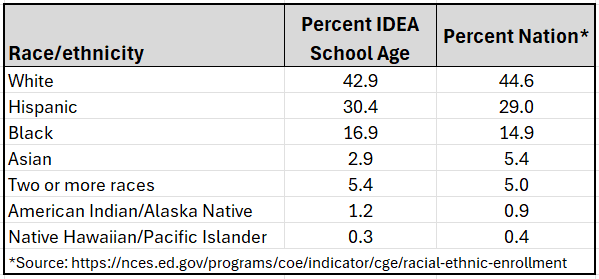
As the table below indicates, Black students are over-represented in special education. This is particularly the case in the Intellectual Disability category.
- DISABILITY CATEGORIES
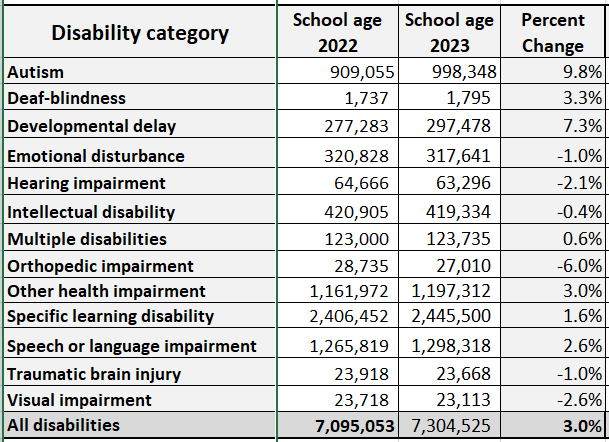
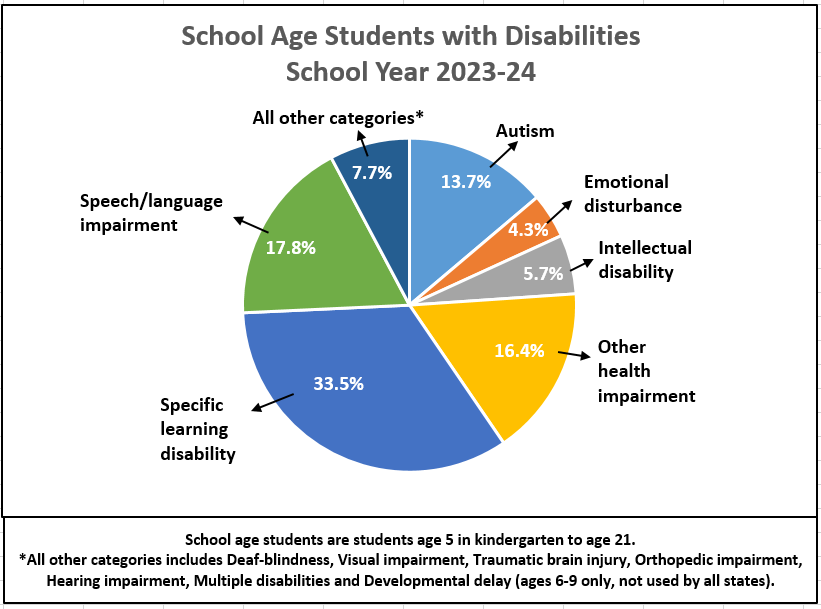
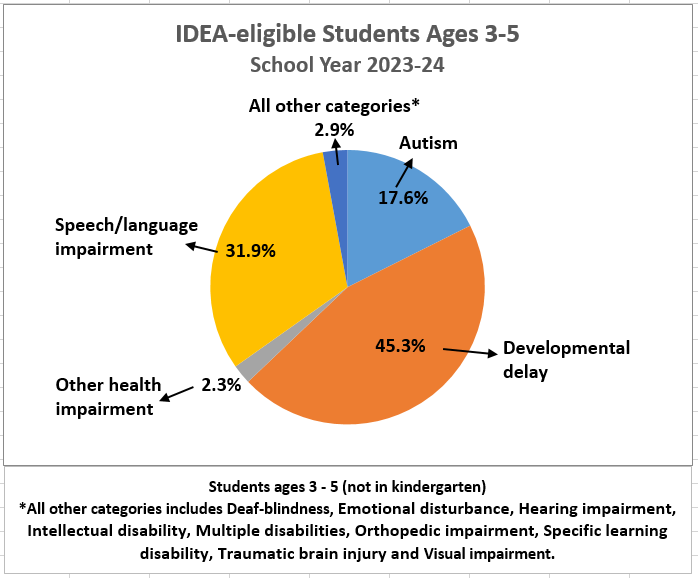
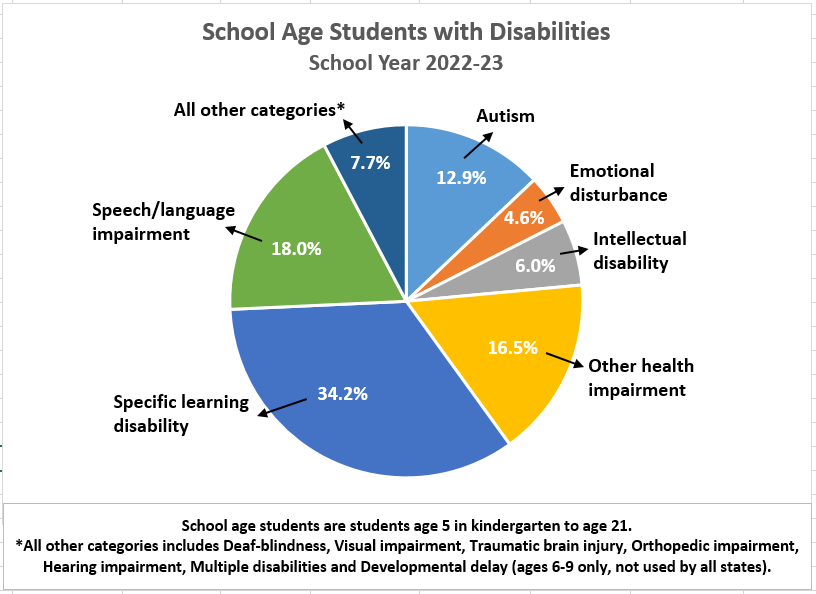
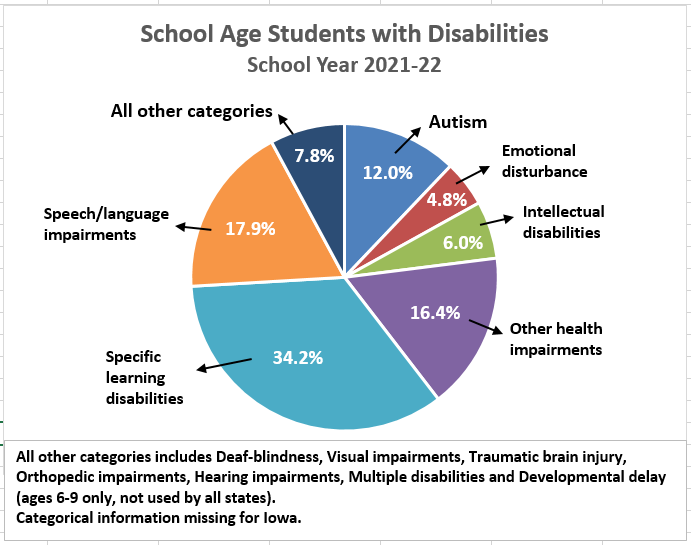
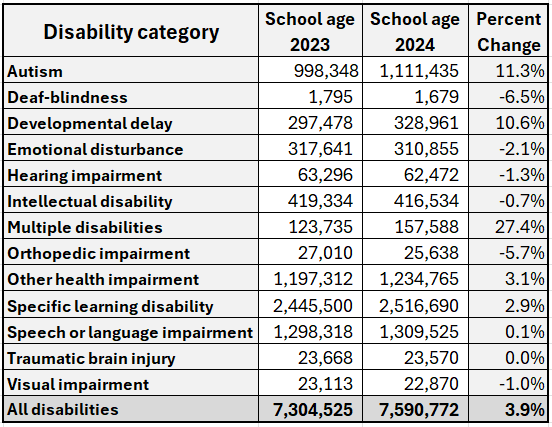
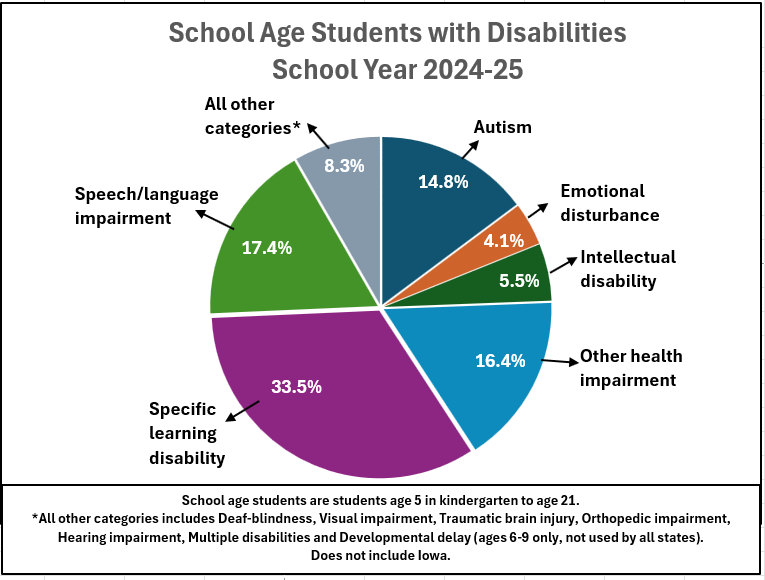
The distribution across IDEA’s 13 disability categories of school age students (ages 5 (in kindergarten) to 21) in 2024 showed increases in the autism, multiple disabilities and developmental delay categories while other categories remained relatively unchanged. The increase in the autism category accounted for 40% of the total increase in 2024. Autism now accounts for nearly 15% of all school age students with disabilities.
- EDUCATIONAL SETTINGS
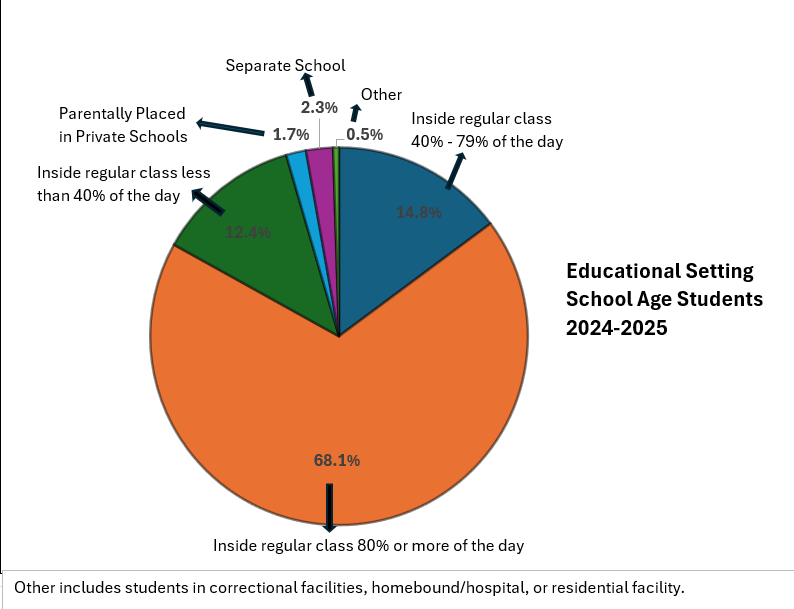
The educational settings of school age students with disabilities has changed little over the past several years. In 2020 the percentage of students educated inside regular class 80% or more of the day was 66.2% compared to 68.1% in 2024. Students inside regular class 40% – 79% in 2020 was 16.4% compared to 14.8% in 2024. These changes, while small, show that more students with disabilities are being educated in regular education than ever before which is believed to be beneficial to students.
NOTE: Much of the information presented here is contained in the Annual Report to Congress which the Department of Education is required by Section 664(d) of the IDEA to submit each year. However, an annual report was not released in 2025. All others are available here.
See also:
Number of School Age IDEA-eligible Students Increases 3 Percent in 2023
Number of School Age IDEA-eligible Students Increases 3 Percent in 2022